
Why I Stopped In My Tracks
The other day, I reached a turning point. I’d been working on the launch of a piece of furniture that I’d been developing, which I could batch produce in my workshop. This product involved the use of a number of wood-based, industrially manufactured sheet materials, imported from various European countries, but with numerous certificates demonstrating their eco credentials.
I had convinced myself that this product made sense at a number of levels, but despite having justified my decision to go ahead, I felt a nagging discomfort – something was not quite right.
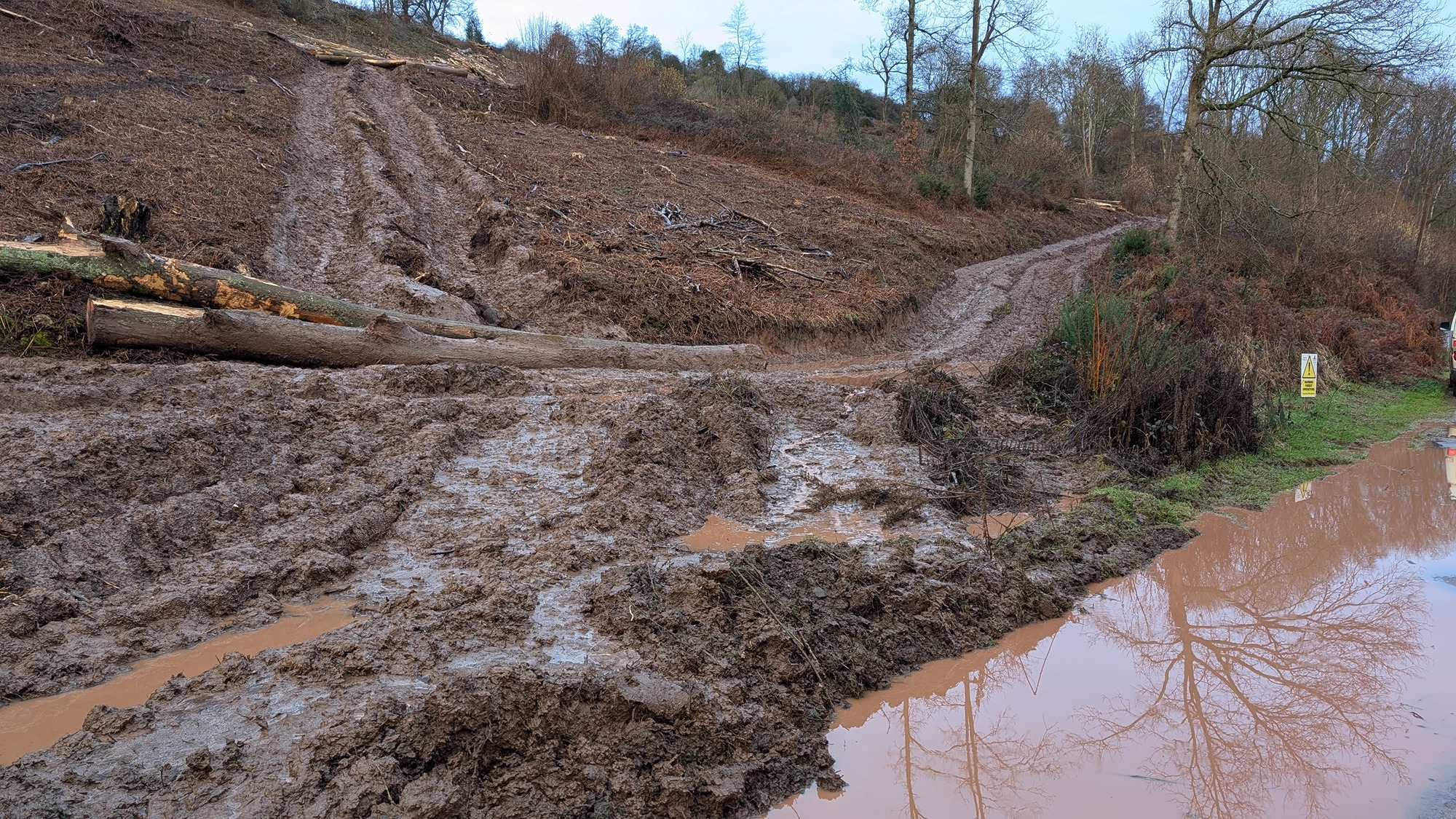
Discussing this with Vey, my wife and business partner, she suggested I go for a walk. A little later, with the sun emerging from the grey drizzle, we set off together on a local round, down the hill and towards the river Wye. Skirting a woodland on the valley slopes, I looked down at the scars carving up the hillside, a souvenir of the colossal machinery used in the wholesale felling of this once beautiful Ash treescape; great gouges far removed from any human scale. The devastated landscape seemed to encapsulate our separation from Nature, to reinforce our view of Her as a set of resources to be industrially harvested for short-term commercial gain.
In that moment, I experienced a cascade of thoughts and feelings:
These immature trees were being clear-felled in response to Ash dieback – a disease imported to the UK with young seedlings, thanks to a market where competition and price matter more than source and quality.
Rainwater and soil was clearly flowing down the great ruts, from hillside to the waterlogged valley floor of a sick river that is still in a state of marked decline, with silting up being one of the factors.
Perversely, the main pollutants of the Wye are phosphates and nitrates from a vast poultry industry that relies on feed grown in the Amazon basin, where huge swathes of rainforest have been cleared for soya production.
The UK is the third largest net importer of timber globally – it’s only very recent years that we’ve dropped from second place!
As global demand for timber increases, and production forecasts continue to rise, so commercial forestry contractors are bringing increasingly heavy machinery into sensitive woodland habitats.
Our winters, when the majority of trees are felled, are getting measurably warmer and wetter with global heating, which exacerbates challenges for timber extraction as the ground becomes far less firm.
Soil compaction in woodlands generally leads to a reduction in tree growth and associated bio-diversity, and to an increase in soil erosion and greenhouse gas emissions.
We’re currently experiencing a web of interrelated crises that appear to be spiralling beyond our control. And when I start to join the dots in this tiny snapshot, on my doorstep, of a revered Area of Outstanding Natural Beauty, it’s clear that we can no longer pretend that we are immune; that our actions are inconsequential.
In that moment of looking at this ravaged landscape, it became clear to me that business as usual was not the way forward. It doesn't work to continue to try and treat the symptoms; we have to focus on the causes of the disease.
So, I’ve decided not to pursue that product. Instead, I’m focussing on something that’s a true reflection of my principles and values. In this case, it’s a piece of furniture made from solid timber, sourced within the county, that can be traced to an individual, sensitively managed woodland.
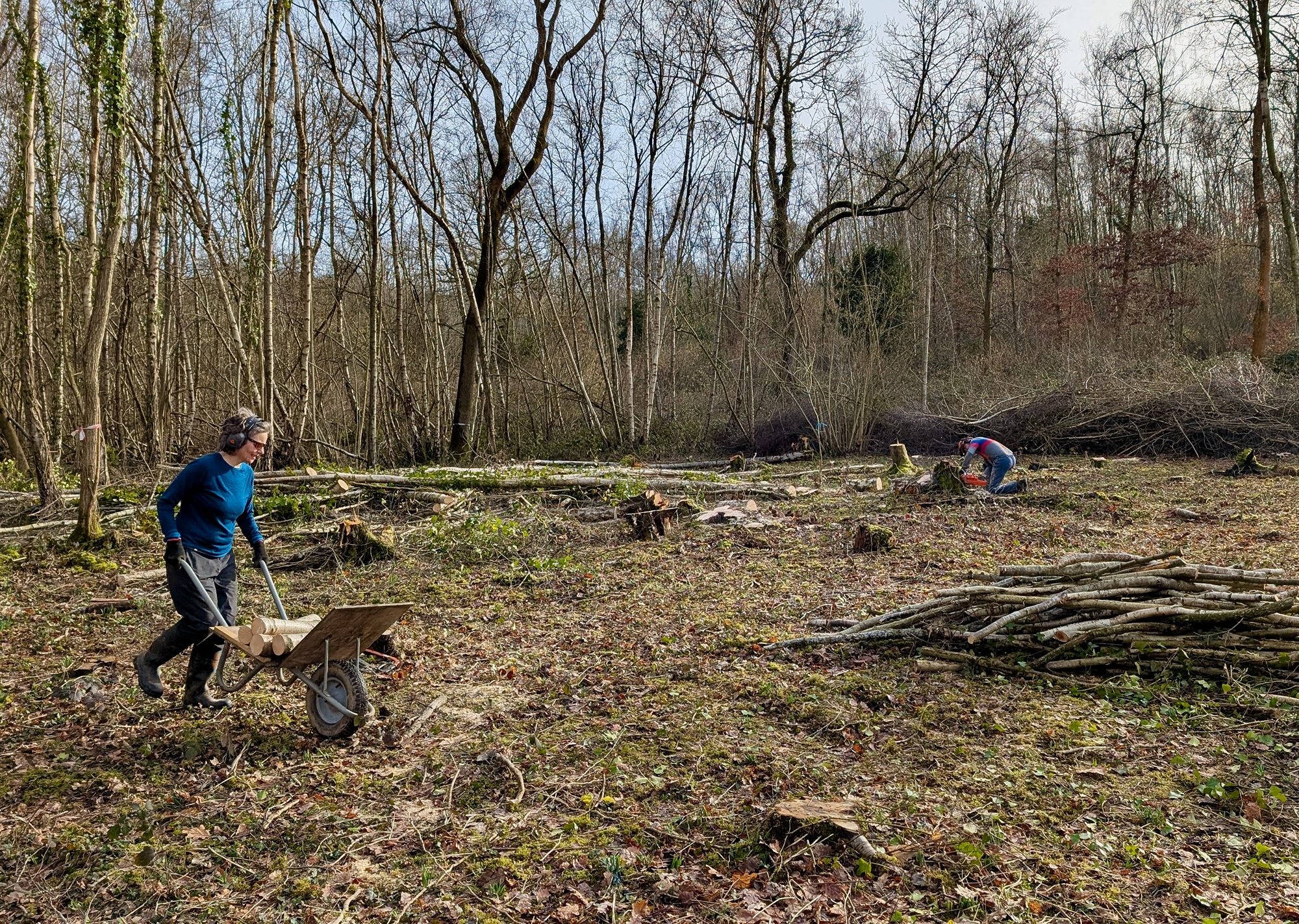
I’m particularly excited that we can use timber from the woodland where we’ve been helping to restore the coppice cycle for the past few years, and where the guiding principle is to increase bio-diversity. So, our raw materials are actually a wonderful by-product of a system that is enabling Nature to thrive.
Watch this space!
Comments